
On this page 11 sections
Grandma used to love painting, but the tiny lines in the coloring book her grandson gave her just made her eyes ache. That is a common story, and it is the reason coloring for seniors works best with a different kind of page: thick outlines, big spaces and subjects that feel familiar and warm.
Key takeaways
- Bold, large designs work best because eyesight, grip and patience for fiddly detail often change with age.
- Large print coloring pages have thick outlines (around 2–3 mm), big areas to fill and few tiny details.
- The right tools matter: chunky pencils, felt-tip pens or markers with a foam grip are easier on stiff fingers.
- Good light and a raised surface make more difference than the pens.
- Coloring for seniors is social as well as relaxing: it works well with family, in clubs and in care homes.
Quick questions
Is coloring good for older adults?
Many older people enjoy it as a calm, creative and sociable hobby that keeps hands moving gently. It is an activity, not a medical treatment.
What makes a page good for seniors?
Thick, dark outlines, large shapes, high contrast and familiar subjects such as flowers, animals, homes and seasons.
What should seniors color with?
Chunky pencils, soft colouring pencils or felt-tip pens. Foam grips help with arthritis. More detail is in the full FAQ.
Why coloring for seniors needs a different page
Most adult coloring books on the high street were designed for people who want a challenge: hundreds of tiny spaces, fine lines and intricate patterns. That is great for some people. For many older adults it is the opposite of relaxing.
Three common changes explain why:
- Eyesight. Many older people find it harder to see fine detail, low contrast and pale lines, especially in poor light. Conditions such as cataracts make contrast even more important.
- Hands. Arthritis, stiffness or a slight tremor make it hard to stay inside very small shapes.
- Energy. A page that takes four hours can feel like a chore. A page that takes thirty minutes feels like a treat.
Good coloring for seniors starts by removing those barriers, not by making the pictures childish. Think of it like a large print novel: the story is the same, it is simply easier to read. When the page is right, coloring for seniors becomes something to look forward to rather than a test of eyesight.
What large print coloring pages look like
“Large print” for coloring borrows the idea from books: the same content, made easier to read. A good large print coloring page has:
- Thick outlines. Around 2–3 mm, dark black, so the edges are clear even without glasses.
- Big spaces. Most areas should be larger than a thumbprint, so a pencil can fill them without precision.
- One clear subject. A teapot, a bunch of flowers, a cottage or a cow, rather than a crowded scene.
- Few tiny details. Small dots and hairlines are left out or made bigger.
- Plenty of white space. It makes the page calm to look at before the first colour goes on.
- Adult subjects. Gardens, kitchens, cosy rooms, birds, seasons and animals, not cartoons aimed at toddlers.
That is exactly the “bold and easy” style we draw in our studio. Our guide to easy coloring pages explains the style in more detail.
The best themes for coloring pages for seniors
Familiar subjects work best because they invite memories and conversation. These themes are popular with older colorists:
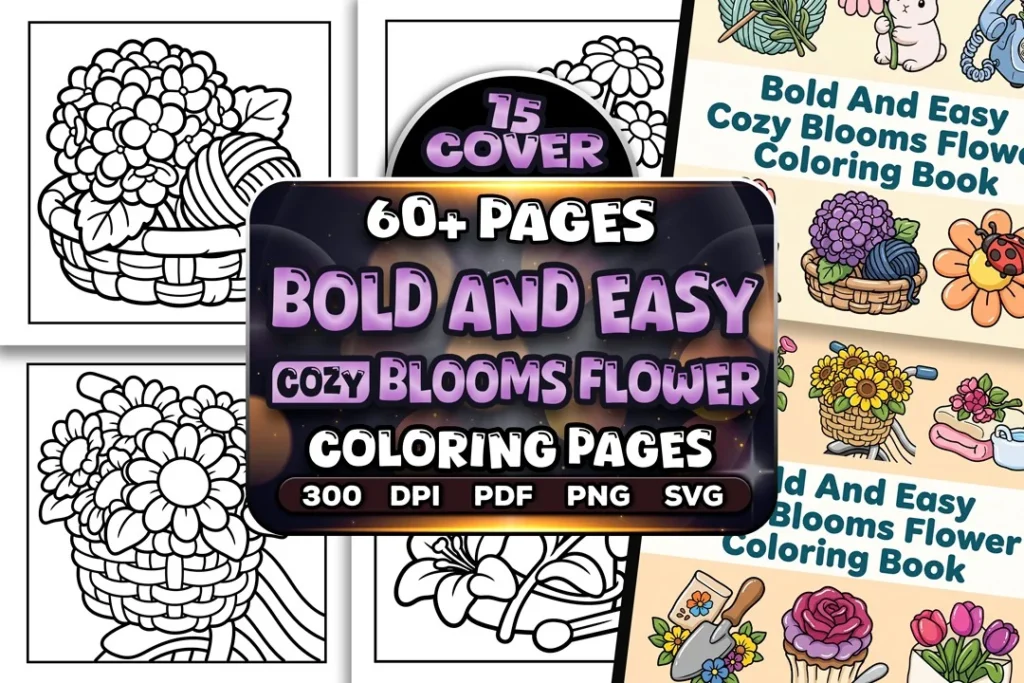
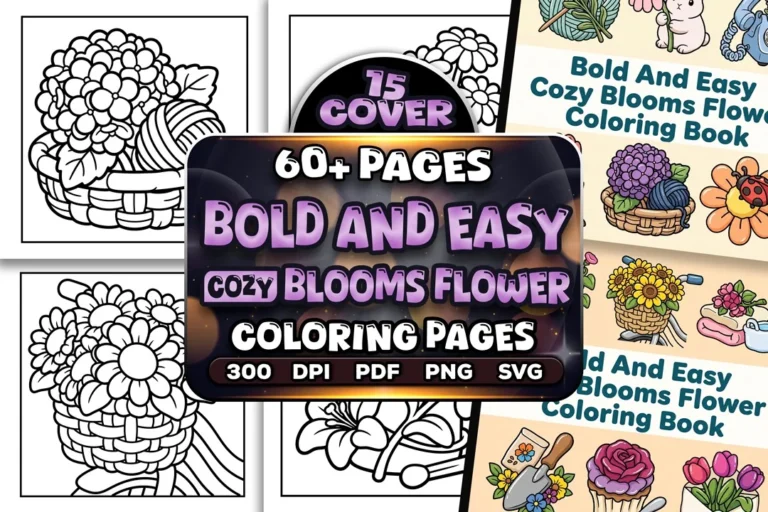
- Flowers and gardens: roses, sunflowers, teapots of daisies and window boxes. The 60+ Bold Easy Cozy Blooms Flower Coloring Pages set is full of them.
- Cosy home scenes: armchairs, fireplaces, kitchens, cups of tea. See the 60+ Bold Easy Cozy Corner Coloring Pages set.
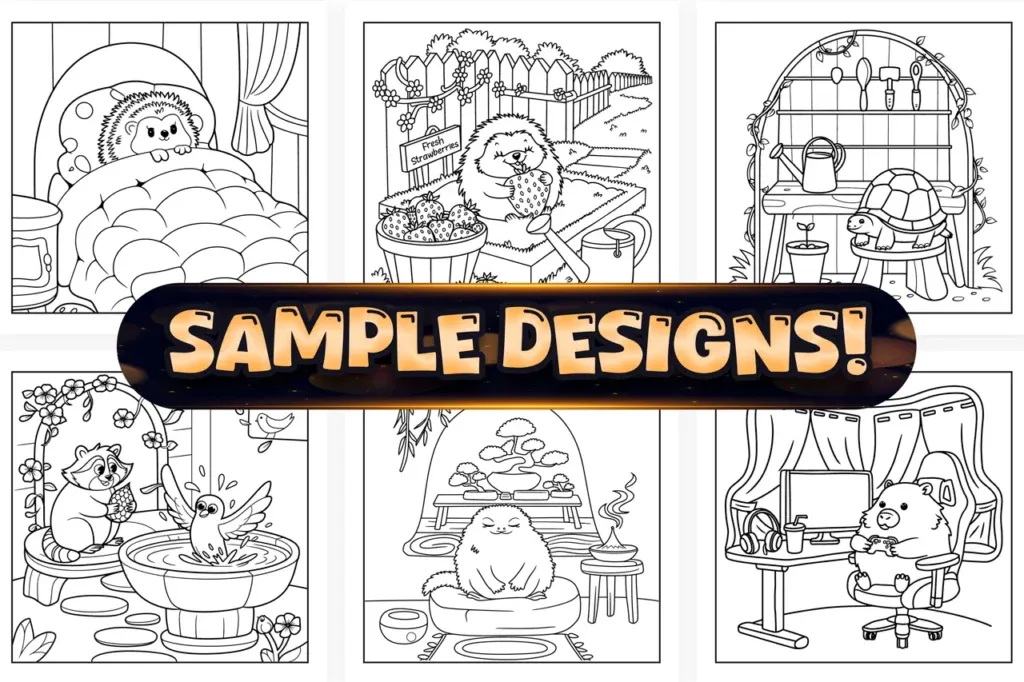
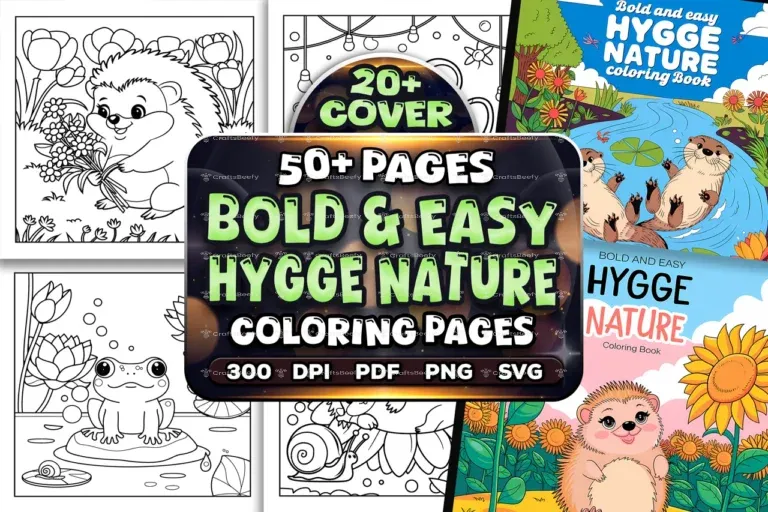
- Nature and wildlife: birds, woodland animals and quiet landscapes from the 50+ Bold Easy Hygge Nature Coloring Pages set.
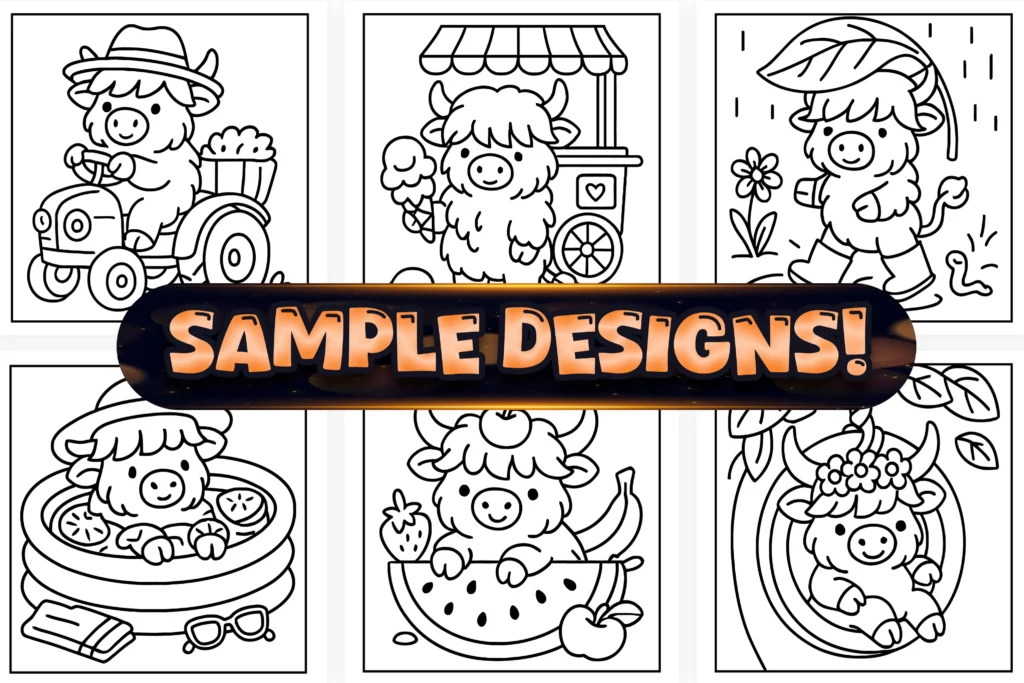
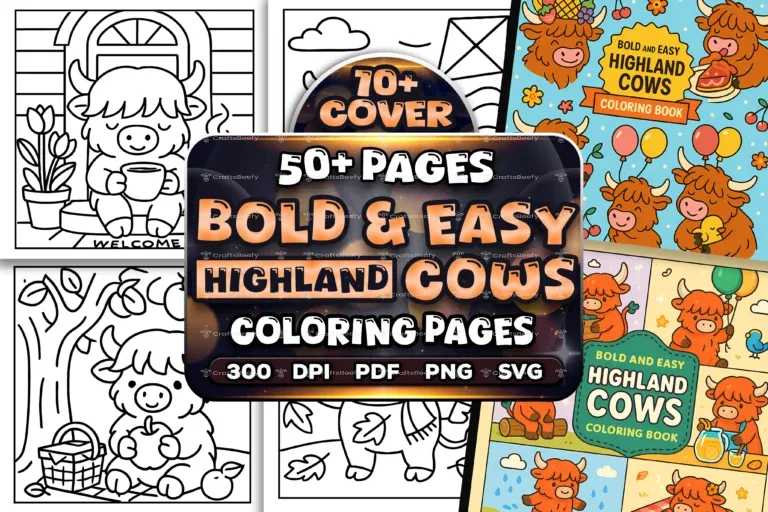
- Farm animals: a friendly highland cow or a hen often starts a story about where someone grew up. Try the 50+ Bold Easy Highland Cow Coloring Pages set.
- Seasons and holidays: Christmas, spring flowers and autumn leaves mark the year in a gentle way.
Avoid themes that might feel babyish. Bold and simple does not have to mean childish, and respect matters. A good rule for coloring for seniors: if you would happily frame the finished page in a hallway, the subject is right.
Tools that are easy on older hands
You do not need an expensive set. Choose for comfort:
| Tool | Why it helps | Good for |
|---|---|---|
| Chunky colouring pencils | Wide barrel, easier to grip | Most people, steady hands |
| Soft colouring pencils | Rich colour with light pressure | Weaker grip, arthritis |
| Felt-tip pens and markers | Bold colour with no pressure at all | Tremor, low strength |
| Foam pencil grips | Thicken any pencil cheaply | Stiff or painful fingers |
| Gel crayons | Glide smoothly, bright colour | Those who prefer crayons |
Felt-tips and markers can bleed through thin paper, so print on slightly heavier paper or put a spare sheet underneath.
Setting up a comfortable coloring space
The setting often matters more than the materials. A few simple changes make coloring for seniors far more comfortable:
- Light from the side. A daylight lamp placed on the opposite side to the coloring hand avoids shadows. Sitting near a window in the day helps too.
- A raised surface. A sloped board, a tray on a cushion or a ring binder under the page reduces neck strain.
- A good chair. Feet flat, back supported, the table at elbow height.
- Non-slip mat. A little low-tack tape at the corners stops the page moving.
- Glasses and magnifiers within reach. RNIB has practical guidance on reading and writing aids for people with sight loss, and many of the same tips help with coloring.
- Pencils in a mug. Easier to pick up than from a flat tin.
How to enjoy coloring for seniors with family and carers
Coloring is one of the easiest activities to share across generations. A grandchild and a grandparent can color the same design side by side and compare results. Some ideas:
- Color the same page. Print two copies and see how differently each person colors it.
- Make cards. A colored flower page folded in half becomes a birthday card for a friend.
- Start a weekly club. In care homes, community centres and libraries, a regular coloring session gives people a reason to meet. Talk flows easily when hands are busy.
- Let the person choose. Offer two or three pages and let them pick. Choice is part of the pleasure.
- Praise the effort, not the neatness. Going over the lines does not matter at all.
Carers often say the conversation is the best part. A page with a teapot or a farmhouse kitchen can start a story nobody has heard before.
A simple 30-minute session plan
- Five minutes to settle: a cup of tea, glasses on, light checked.
- Two minutes to choose: offer three pages and let the person pick one.
- Twenty minutes of coloring, with music or a radio programme quietly in the background if they like it.
- Three minutes to admire: talk about the colours chosen, add the date and, if they want, a name.
Keeping the plan this loose is what makes coloring for seniors relaxing rather than another appointment in the day.
What coloring for seniors can and cannot do
Coloring is a pleasant, creative hobby that keeps hands moving gently, gives a sense of achievement and can be a calm part of the day. Some small studies suggest that coloring can help people feel calmer for a while; our post on the benefits of coloring summarises the research honestly.
It is not a medical treatment. It will not prevent dementia or replace exercise, social contact or care. The NHS recommends that older adults also stay physically active; its physical activity guidelines for older adults suggest some activity every day. A short walk followed by a coloring session is a lovely combination.
Printing tips for large print coloring
- Print at 100% (no “fit to page” shrinking) so the lines stay thick.
- Use A4 or US Letter, or enlarge to A3 at a print shop for very low vision.
- Choose matte paper of around 100–120 gsm to reduce glare and bleed.
- Print in black only for the darkest, sharpest outlines.
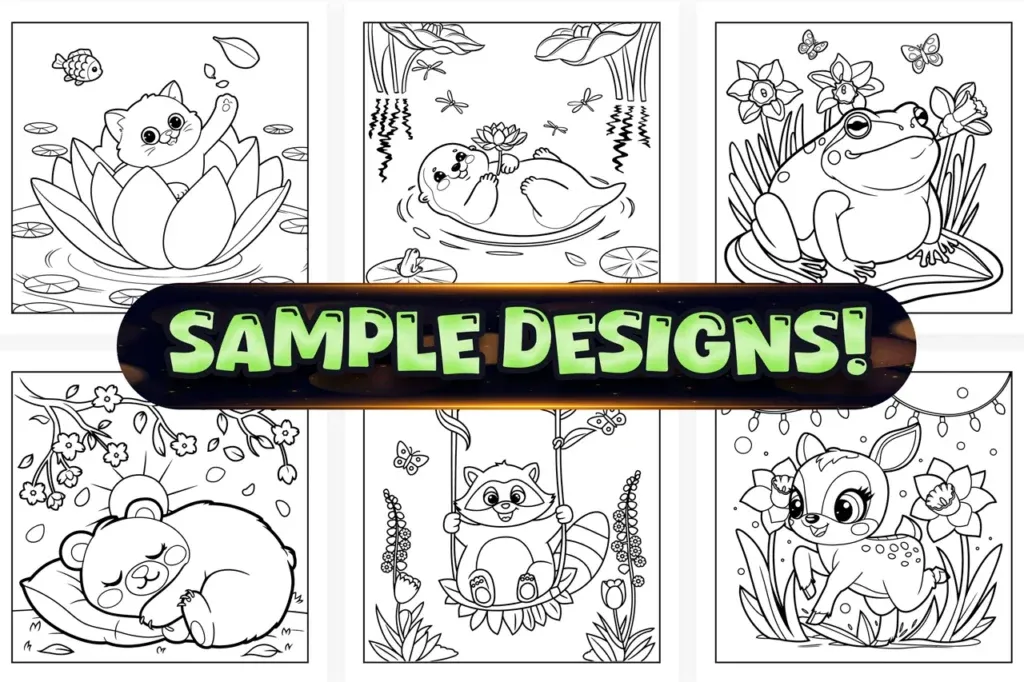
Free large print pages to try
The easiest way to see whether this style suits someone is to print a few pages and try them together.
Get 5 free large print pages
Five bold, thick-line pages that are easy on the eyes. Confirm your email with one click and print them for your next coloring session.
We use your email to send the pages you asked for. Privacy Policy.
For a care home or a family who colors a lot, the Bold & Easy Mega Bundle includes our flower, cozy, nature and seasonal sets for $14.99 until 31 December 2026, then $24.99. Pages can be printed as often as you need for your own home or care setting.
Sets that work well for older colorists



Coloring for seniors: FAQ
Why is coloring good for seniors?
It is a calm, creative hobby that keeps hands moving gently, gives a sense of achievement and is easy to share with family or friends. It is an activity, not a medical treatment.
What are large print coloring pages?
Pages with thick, dark outlines, big spaces to fill and few tiny details, made so they are easy to see and comfortable to color.
What are the best coloring pages for seniors with arthritis?
Bold designs with big shapes, colored with felt-tip pens, soft pencils or pencils fitted with foam grips so less pressure is needed.
Is coloring good for people with dementia?
Many families and care homes use simple coloring as a calm, sociable activity. Choose very simple, familiar designs, keep sessions short and follow advice from the person’s care team.
Are coloring pages for seniors childish?
They should not be. Good pages use adult subjects such as gardens, homes, animals and seasons, simply drawn with bold lines.
How long should a coloring session be?
Around 20 to 45 minutes works for most people. Stop before it becomes tiring and let the person decide.
Can I print your pages for a care home?
Pages can be printed as often as you need for the people in your own care setting. The license page explains the details.